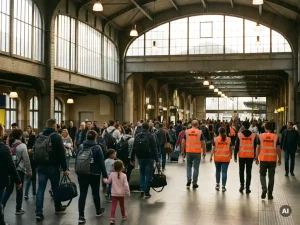
Business travellers face a wide range of risks, including medical emergencies, security threats, political instability, and health hazards that vary significantly by destination. These risks are not evenly distributed; the level of exposure depends on where employees are travelling, how long they are away, and whether their organisation has a structured travel risk management programme in place. The sections below address the most common and consequential risks in detail, along with guidance on how organisations should respond.
How do medical emergencies affect business travellers abroad?
Medical emergencies are one of the most disruptive and costly risks business travellers face. A sudden illness, accident, or surgical need in a foreign country can quickly become unmanageable without pre-arranged support. The combination of unfamiliar healthcare systems, language barriers, and financial complexity means that even a treatable condition can escalate if coordination is absent.
When a traveller requires emergency surgery abroad, the immediate challenges are rarely just clinical. Hospitals may require a Guarantee of Payment before treatment begins. Medical updates need to be communicated clearly to both the employer and the patient’s family. And once the acute phase is resolved, assessing when the patient is fit to travel home requires careful judgement; moving too early creates risk, while waiting too long increases cost and stress.
Effective pre-travel risk briefings and access to 24/7 medical assistance services are the most reliable way to reduce the impact of medical emergencies on travelling employees. Organisations that have these structures in place can act immediately, rather than scrambling to find providers under pressure.
What security threats do business travellers commonly face?
Business travellers are commonly exposed to security threats including opportunistic crime, targeted theft, physical assault, kidnap for ransom, and threats linked to their professional role or employer. The specific threat profile varies by region, but no destination is entirely without risk, and corporate travellers are often perceived as higher-value targets than leisure tourists.
Opportunistic and targeted crime
Petty theft, mugging, and vehicle-based crime are among the most frequent incidents affecting business travellers. These are often opportunistic, but travellers who follow predictable routines, the same hotel, the same route, the same arrival time, can become targeted. Varying movements and maintaining awareness of the local environment significantly reduces exposure.
Kidnap and high-stakes security incidents
In higher-risk regions, the threat extends to kidnap for ransom and armed attacks on personnel. These scenarios require a different level of preparation entirely. Close protection, armoured transport, and real-time route intelligence are standard elements of a security plan for executive travel in complex environments. Organisations sending staff into such regions without these measures in place are accepting significant liability.
Travel security consulting before departure is essential for any assignment into elevated-risk areas. A thorough threat and vulnerability assessment allows organisations to build a proportionate security plan rather than reacting after an incident has occurred.
Why is political instability a growing risk for corporate travel?
Political instability is a growing risk for corporate travel because geopolitical conditions are changing faster than most organisations can track. Elections, civil unrest, military conflicts, and sudden policy shifts can alter the safety of a destination within hours, leaving travelling employees exposed if no monitoring or response capability is in place.
The challenge for travel risk managers is that instability rarely announces itself in advance. A country assessed as moderate risk in a pre-travel briefing can deteriorate rapidly. During periods of acute instability, commercial flights are often suspended, borders close, and standard evacuation routes become unavailable. Organisations that rely solely on commercial travel infrastructure find themselves without options precisely when they need them most.
Real-time travel risk alerts and continuous itinerary monitoring are essential tools for managing this kind of dynamic threat. Equally important is having a pre-agreed response plan that includes evacuation triggers, communication protocols, and access to emergency aviation and ground transport. Without these elements, political instability shifts from a manageable risk to a crisis.
How does poor traveller tracking create duty of care gaps?
Poor traveller tracking creates duty of care gaps by leaving organisations without reliable visibility of where their employees are, whether they are safe, and how to reach them in an emergency. If a crisis occurs and an organisation cannot locate its travelling staff within minutes, its ability to respond effectively is severely compromised.
Many organisations still rely on itinerary data that becomes outdated as soon as a traveller deviates from their plan. Flight delays, last-minute hotel changes, and unscheduled movements all create blind spots. Without business traveller tracking that updates in real time, a travel risk manager is working from a map that no longer reflects reality.
The consequences of these gaps are both operational and legal. Duty of care obligations require organisations to take reasonable steps to protect employees during travel. Demonstrating that reasonable steps were taken is significantly harder when no tracking system was in place. Investing in a corporate travel safety platform that provides continuous location visibility is one of the most direct ways to close this gap and demonstrate compliance with duty of care travel policy requirements.
What are the biggest health risks beyond medical emergencies?
Beyond acute medical emergencies, business travellers face ongoing health risks including infectious disease exposure, mental health strain, fatigue-related impairment, and the cumulative effects of frequent long-haul travel. These risks are less dramatic than a surgical emergency but can have serious consequences for both individual wellbeing and organisational performance.
Infectious disease and environmental health hazards
Travellers moving between countries are exposed to diseases that may not be present at home, including vector-borne illnesses, food- and waterborne infections, and respiratory conditions more prevalent in certain regions. Vaccination requirements and health advisories vary by destination, and a pre-travel risk briefing should always include destination-specific health guidance. Travellers who skip this step are relying on luck rather than preparation.
Mental health and fatigue
Frequent international travel places significant strain on mental health. Disrupted sleep, time zone changes, social isolation, and the pressure of performing in unfamiliar environments all contribute to fatigue and burnout. Organisations with high volumes of business travel should consider mental health support as part of their broader duty of care framework, not as an afterthought. The health risks of frequent travel are cumulative, and they affect decision-making, reaction time, and overall resilience in ways that matter in high-pressure environments.
How should organisations respond when a business traveller is in danger?
When a business traveller is in danger, organisations should activate their emergency response protocol immediately, establish contact with the traveller, assess the nature and severity of the threat, and deploy the appropriate assistance, whether medical, security, or evacuation support. Speed matters. Delayed response compounds risk and limits available options.
The first priority is communication. A traveller in danger needs to know that their organisation is aware of the situation and actively working to help. Simultaneously, the organisation needs accurate information about the traveller’s location, condition, and the nature of the threat. This is where real-time tracking and a 24/7 operations capability become critical.
The response then depends on the type of incident. A medical emergency requires immediate coordination with local healthcare providers, payment guarantees, and a plan for repatriation once the patient is stable. A security incident may require close protection deployment, safe house access, or emergency evacuation using ground or air assets. A political crisis may require mass communication to multiple travellers across a region simultaneously, combined with coordinated movement planning.
Organisations that have not defined these response pathways before an incident occurs will struggle to execute them under pressure. A clear duty of care travel policy, tested response protocols, and a relationship with a trusted assistance provider are the foundations of an effective response capability.
How NGS helps organisations manage business travel risk
Northcott Global Solutions provides end-to-end travel risk management designed to protect employees before, during, and after every trip. For organisations that need to close the gaps described in this article, NGS offers:
- Pre-travel risk briefings calibrated to destination risk level, covering security, health, and political conditions
- Live traveller tracking through the Aurora platform, providing continuous visibility of personnel location and itinerary status
- 24/7 operations centre support with the capability to respond to incidents within an average of 40 minutes or less in urban areas
- Emergency medical and security response, including evacuation by ground or air across more than 190 countries
- Mass emergency communication via SIREN, enabling rapid contact with multiple travellers during fast-moving crises
- Travel security consulting and threat assessments for high-risk destinations and executive travel programmes
NGS aligns all services with ISO 31030, the international standard for travel risk management guidance, giving organisations a defensible framework for their duty of care obligations. To discuss how NGS can support your travel risk programme, contact the NGS team today.
Related Articles
- What is the difference between travel risk intelligence and threat assessment?
- Why do governments rely on private companies for emergency evacuations?
- When should a company trigger an emergency evacuation protocol?
- How do you prepare medically before visiting a high-risk country?
- How do you find reliable medical care in a high-risk destination?