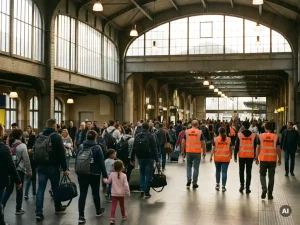
Central Asia presents a genuinely complex travel risk picture in 2026. The region spans five countries with distinct political systems, security environments, and infrastructure realities, ranging from stable but authoritarian states to areas with active conflict proximity and chronic instability. Business travelers and the organisations responsible for their safety need destination-specific intelligence, not generic caution. The sections below address the most pressing questions about travel risk in Central Asia this year.
Which Central Asian countries pose the highest security risk in 2026?
In 2026, Tajikistan and Kyrgyzstan carry the highest security risk for international business travelers in Central Asia. Tajikistan faces ongoing instability in the Gorno-Badakhshan Autonomous Region (GBAO), including periodic clashes between security forces and local populations. Kyrgyzstan has a history of sudden political upheaval and inter-ethnic violence that can escalate with little warning. Kazakhstan, Uzbekistan, and Turkmenistan present lower immediate security threats but carry significant political and operational risks of their own.
Tajikistan’s border regions with Afghanistan are particularly sensitive. The Afghan security situation continues to generate spillover effects, including narcotics trafficking, armed group activity, and refugee movement that destabilises peripheral areas. Travelers entering Tajikistan for resource sector or infrastructure work near these zones face elevated exposure.
Kyrgyzstan’s capital, Bishkek, is generally manageable for business travel, but the country’s political volatility means that civil unrest can flare rapidly. Protests and government transitions have historically disrupted movement, closed borders, and triggered curfews with minimal notice.
Kazakhstan presents a different profile. Following the January 2022 unrest, the government tightened security measures significantly. The country remains the most accessible and commercially developed in the region, but travelers should not treat stability as permanence. Underlying social tensions and economic pressures persist.
What are the main political risks for business travelers in Central Asia?
The primary political risks for business travelers across Central Asia in 2026 are authoritarian governance, arbitrary detention, and sudden policy shifts that can affect operations, movement, and personal safety without warning. All five states maintain tight government control over civil society, media, and foreign activity, which limits the transparency that risk managers rely on.
Arbitrary detention is a documented concern across the region. Foreign nationals have been held without clear legal basis, particularly those working in sectors considered strategically sensitive: energy, telecommunications, and mining. In some cases, commercial disputes have escalated into criminal proceedings against company representatives.
Geopolitical alignment is another variable. Central Asian states are navigating competing pressures from Russia, China, and Western partners. That balancing act creates policy unpredictability. Sanctions compliance, dual-use technology restrictions, and trade route disruptions all carry operational implications for international businesses operating in the region.
In Turkmenistan, information control is near-total. Travelers have limited ability to access independent information, and the government’s opacity makes pre-travel risk assessment significantly harder than in most other destinations. Any business travel there warrants thorough pre-trip briefing and close monitoring throughout.
How does medical infrastructure in Central Asia affect traveler safety?
Medical infrastructure across Central Asia is generally inadequate for serious or complex medical emergencies, and this is one of the most significant and underestimated travel risks in the region. Outside of major cities like Almaty and Astana in Kazakhstan, hospitals lack the equipment, specialist capacity, and pharmaceutical supply chains needed to treat severe trauma, cardiac events, or surgical emergencies to an acceptable standard.
Tajikistan and Kyrgyzstan have the weakest medical systems in the region. Rural and remote areas have minimal emergency response capability, and evacuation to a facility capable of managing a serious case can take many hours, or longer if weather or road conditions are poor. Even in urban facilities, blood supply reliability, infection control, and post-operative care fall well short of Western standards.
Kazakhstan offers the strongest medical provision in Central Asia, particularly in Almaty, where internationally affiliated clinics operate. However, even here, the most complex cases typically require medical evacuation to facilities in Turkey, the UAE, or Europe. Travelers should not assume that proximity to a capital city guarantees adequate care.
For any organisation sending personnel into Central Asia, medical evacuation coverage is not optional. Pre-travel planning should identify the nearest suitable medical facility for each destination, establish a clear escalation pathway, and ensure that the assistance provider has genuine on-the-ground capability in the region, not just a contact number.
What are the biggest logistical and operational risks when traveling in Central Asia?
The biggest logistical and operational risks in Central Asia include unreliable transport infrastructure, border crossing complexity, communication blackouts, and the limited availability of vetted local support. These factors compound each other in ways that can turn a manageable incident into a serious crisis if preparation is insufficient.
Road quality deteriorates sharply outside urban centres, particularly in Tajikistan and Kyrgyzstan, where mountain terrain creates genuine vehicle and route risks. Seasonal conditions, including snow, landslides, and flooding, can close key routes entirely. Air connectivity is limited across the region, with infrequent international services and domestic options that are often unreliable or poorly maintained.
Border crossings between Central Asian states can be unpredictable. Documentation requirements shift, crossing points close without notice, and wait times can stretch from hours to days. Travelers moving between countries for multi-destination itineraries need contingency routing built into their plans, not just their primary route.
Communication infrastructure is another operational constraint. Mobile coverage is inconsistent in rural and mountainous areas, and internet access is subject to government filtering and occasional blackouts. Travelers relying on standard communication tools may find themselves isolated at exactly the moment they need to report in or receive updated guidance.
The availability of qualified, vetted local support, drivers, interpreters, medical contacts, and security personnel, varies considerably. In Kazakhstan and Uzbekistan, the commercial infrastructure is more developed. In Tajikistan and Turkmenistan, finding reliable, trusted local partners requires advance work that cannot be done on arrival.
How should organizations prepare employees for travel to Central Asia?
Organisations should prepare employees for Central Asia travel through destination-specific pre-trip briefings, Hostile Environment Awareness Training (HEAT) for higher-risk destinations, clear communication protocols, and verified emergency contact arrangements before departure. Generic travel safety guidance is insufficient for a region with this level of complexity and variability between countries.
Pre-trip briefings should cover the specific country and city being visited, not just the region as a whole. A traveler going to Almaty faces a different risk environment than one traveling to Dushanbe or a mining site in the Kyrgyz mountains. Briefings should address local laws, cultural norms that affect safety, areas to avoid, emergency contacts, and the escalation process if something goes wrong.
HEAT training is appropriate for anyone traveling to higher-risk areas, particularly those visiting border regions, remote sites, or destinations adjacent to conflict zones. This training covers situational awareness, checkpoint behaviour, communication under stress, and immediate response to security incidents.
Traveler tracking is essential. Organisations have a duty of care obligation to know where their people are, particularly in environments where communication infrastructure is unreliable. travel risk management services that include live tracking and 24/7 monitoring provide the oversight that internal teams cannot replicate alone.
Finally, employees should be briefed on what to do if they cannot reach their organisation. Establishing a clear check-in schedule, a designated point of contact, and a fallback communication method before departure reduces the risk that a communication gap escalates into a full emergency response.
When should a company consider evacuation for personnel in Central Asia?
A company should consider evacuation for personnel in Central Asia when the security environment deteriorates to a point where the risk of remaining exceeds the operational cost of withdrawal, or when a medical emergency requires care that cannot be provided locally. The decision should be made against pre-established thresholds, not in the moment of crisis.
Triggers that warrant serious evacuation consideration include the outbreak of civil unrest with no clear trajectory, government crackdowns that place foreign nationals at elevated risk of detention, natural disasters that compromise infrastructure and movement, or a credible and specific threat against the traveler or their organisation.
Medical evacuation thresholds should be defined before travel begins. If a traveler requires surgery, intensive care, or specialist treatment that local facilities cannot safely provide, evacuation should begin as early as possible. Delayed decisions in medical cases consistently worsen outcomes. The further from a capable facility the traveler is, the earlier the decision needs to be made.
Organisations operating in the region should have an evacuation plan that accounts for the specific challenges of Central Asia: limited air options, complex border crossings, and the possibility that standard commercial routes may be unavailable. Plans should identify primary and contingency extraction routes, specify the provider responsible for execution, and be reviewed before each deployment rather than treated as a static document.
How NGS supports travel risk management in Central Asia
Northcott Global Solutions provides end-to-end support for organisations sending personnel into Central Asia and other high-risk environments worldwide. For this region specifically, NGS offers:
- Pre-travel risk briefings calibrated to the specific country, city, and operational context
- 24/7 traveler tracking and monitoring through the Aurora platform, maintaining visibility even in areas with limited connectivity
- Medical and security evacuation with an average response time of 40 minutes or less in urban areas, drawing on a network spanning more than 190 countries
- HEAT and crisis management training to prepare personnel before they travel
- Close protection and secure ground transportation for high-risk itineraries and executive travel
- Threat and vulnerability assessments for organisations entering new markets or operating in complex environments
NGS aligns its Security and Travel Risk Management services with ISO 31030, supporting organisations before, during, and after travel. If your organisation is planning operations in Central Asia or needs to review its current duty of care framework, speak to the NGS team to discuss your specific requirements.
Related Articles
- Why is offline functionality important in a field security app?
- How do sanctions and export controls affect corporate travel decisions?
- What does a travel risk management program include?
- How do you balance traveller privacy with duty of care obligations?
- What vaccinations do you need before travelling to high-risk countries?