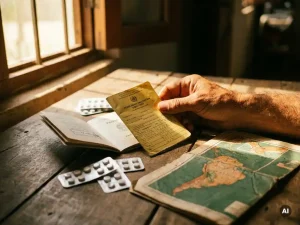
A medical kit for high-risk travel should include wound care supplies, prescription antibiotics, rehydration salts, pain relief, blister and burn treatment, and any personal medications. The exact contents depend on the destination, the duration of the trip, and the traveller’s medical history. The sections below break down each decision point so you can pack with confidence and purpose.
What medical supplies are considered essential for high-risk destinations?
Essential medical supplies for high-risk destinations include wound closure strips, sterile gauze, adhesive bandages, antiseptic wipes, a tourniquet, rehydration sachets, broad-spectrum antibiotics, anti-diarrhoeal medication, antihistamines, and a digital thermometer. These items address the most common and most serious medical events that occur in environments where professional healthcare may not be quickly accessible.
High-risk country travel introduces conditions that a standard first aid kit simply is not designed to handle. In remote or conflict-affected areas, the gap between an incident and qualified medical attention can be hours or even days. Your kit needs to bridge that gap.
Beyond the basics, experienced travellers and security professionals working in high-risk environments also carry:
- A haemostatic dressing such as QuikClot or Combat Gauze for severe bleeding
- A compression bandage or Israeli bandage
- A SAM splint for fracture stabilisation
- Sterile gloves and a CPR face shield
- A needle decompression kit if trained to use one
- Water purification tablets or a portable filter
The principle is simple: pack for the most likely problems first, then add capacity for the most serious ones. In a high-risk environment, both categories matter.
How does a high-risk travel kit differ from a standard travel first aid kit?
A high-risk travel medical kit differs from a standard travel first aid kit in scope, clinical depth, and the severity of scenarios it is designed to address. Where a standard kit covers minor cuts, blisters, and headaches, a high-risk kit is built to manage traumatic injuries, infections, and medical emergencies in environments where hospital access is delayed or unavailable.
A standard travel kit might fit in a small pouch and contain plasters, paracetamol, and some antiseptic cream. That is appropriate for a city trip in a stable country with reliable emergency services. It is not appropriate for a remote field assignment, a post-conflict zone, or a destination with limited medical infrastructure.
The key differences come down to three areas:
- Trauma capability: High-risk kits include tourniquets, haemostatic agents, and wound-packing supplies. Standard kits do not.
- Prescription medications: High-risk kits typically include antibiotics, antimalarials, and emergency medications that require a prescription and medical guidance.
- Duration and self-sufficiency: High-risk kits are built to sustain a traveller for longer periods without resupply, often including IV fluid capability or advanced airway tools when the traveller has the training to use them.
The environment you are entering should dictate which kit you carry. If your destination has limited or unreliable healthcare access, your kit needs to reflect that reality.
Which prescription medications should travellers carry for high-risk trips?
Travellers heading to high-risk destinations should carry prescription medications including a broad-spectrum antibiotic such as ciprofloxacin or azithromycin, an antimalarial appropriate to the region, altitude sickness medication such as acetazolamide for relevant destinations, and any personal prescription medications in sufficient supply. Always consult a travel medicine specialist before departure.
The specific prescriptions depend heavily on the destination. A traveller heading to sub-Saharan Africa faces different risks than one deploying to Central Asia or a conflict-affected urban environment. A travel health clinic or expedition medicine specialist can assess your itinerary and recommend the right combination.
Commonly prescribed medications for high-risk travel include:
- Antibiotics: For traveller’s diarrhoea, wound infections, or respiratory illness when professional care is unavailable
- Antimalarials: Atovaquone-proguanil, doxycycline, or mefloquine depending on regional resistance patterns
- Epinephrine auto-injector: For travellers with known severe allergy risk
- Acetazolamide: For destinations above 2,500 metres where altitude sickness is a genuine risk
- Antifungals and antiparasitic medications: For extended stays in tropical or high-exposure environments
Carry a letter from your prescribing physician explaining each medication, its purpose, and your diagnosis. This is not just good practice. In many countries, it is a legal requirement for crossing borders with controlled substances.
What are the legal and customs considerations for carrying medical supplies internationally?
Carrying medical supplies across international borders requires awareness of each country’s import regulations, particularly for prescription medications, needles, and controlled substances. Many countries restrict or prohibit certain drugs that are freely available at home. Failing to declare medical supplies or carrying prohibited items can result in confiscation, fines, or detention.
This is one of the most commonly overlooked aspects of travel risk management preparation. The rules vary significantly between countries and can change without notice, particularly in politically unstable regions.
Key steps to take before you travel:
- Check the destination country’s embassy website for restrictions on medications and medical equipment
- Carry all prescription medications in their original labelled packaging
- Obtain a physician’s letter or medical certificate for each prescription item, translated into the local language where possible
- Declare all medications at customs if asked, even if you believe they are permitted
- Research whether syringes, auto-injectors, or other equipment require special documentation
- Check whether your destination country has restrictions on specific antibiotics or controlled analgesics
Some countries in the Middle East, Southeast Asia, and parts of Africa have particularly strict regulations around medications that may seem routine elsewhere. Codeine, for example, is a controlled substance in several countries where it is sold over the counter in others. Research each transit country, not just your final destination.
Should travellers build their own kit or use a professionally assembled one?
Whether to build your own medical kit or use a professionally assembled one depends on your level of medical training, the complexity of your destination, and how frequently you travel to high-risk environments. For most corporate travellers without clinical training, a professionally assembled kit designed for the destination type is the safer and more practical choice.
Building your own kit has appeal. You can tailor it precisely to your medical history and itinerary. But it also requires sound knowledge of what to include, how to use each item, and how to maintain the kit over time. An incomplete or incorrectly assembled kit can create false confidence.
When a professionally assembled kit makes sense
Pre-assembled kits designed for high-risk travel are curated by expedition medics and travel medicine specialists. They are organised for quick access under stress, include instructions for use, and are often matched to specific environments such as tropical, remote, or conflict-affected zones. For travellers who deploy infrequently or lack medical training, this removes significant risk from the preparation process.
When building your own kit is appropriate
Experienced travellers with first aid or wilderness medicine training, or those who travel regularly to the same type of high-risk environment, may benefit from a custom kit. They understand what they need, how to use it, and how to adapt it to specific conditions. In these cases, a custom kit can be more efficient and better matched to the individual’s needs.
Whichever approach you take, review and restock your kit before every trip. Medications expire. Supplies get used. A kit that was complete six months ago may not be complete today.
What training do travellers need to actually use a high-risk medical kit?
To use a high-risk medical kit effectively, travellers should hold at minimum a current first aid certification, and ideally complete a wilderness first aid course or Hostile Environment and First Aid Training (HEFAT). Without training, even a well-stocked kit provides limited value. Knowing how to apply a tourniquet, pack a wound, or manage shock requires hands-on practice, not just reading instructions.
This point is frequently underestimated. Organisations invest in equipping their people but sometimes overlook whether those people can actually use what they are carrying. In a high-stress situation, untrained individuals often freeze or use equipment incorrectly, which can worsen an injury.
Recommended training levels by traveller type:
- Standard business travellers to medium-risk destinations: Basic first aid certification, including CPR and bleeding control
- Travellers to remote or high-risk destinations: Wilderness First Aid or equivalent, covering patient assessment, wound management, and evacuation decisions
- Security and field personnel: Tactical Combat Casualty Care (TCCC) or HEFAT, which includes training under simulated stress conditions
Training should be refreshed regularly. Skills degrade quickly without practice, and protocols are updated as medical guidance evolves. Many specialist providers offer scenario-based training that mirrors the environments their clients actually work in, which significantly improves retention and readiness.
Carrying a kit without the training to use it is a risk management gap, not a solution.
How NGS supports travellers in high-risk environments
A well-packed medical kit is one layer of protection. But in genuinely high-risk environments, it works best as part of a broader risk management framework. Northcott Global Solutions provides end-to-end support for organisations sending personnel into complex or dangerous locations, including:
- Pre-travel risk assessments and destination-specific briefings aligned with ISO 31030
- 24/7 monitoring and traveller tracking through the Aurora platform
- Immediate medical assistance coordination, including guarantees of payment and hospital admission support
- Medical and security evacuations across more than 190 countries
- Specialist training including Hostile Environment Awareness Training (HEAT) and crisis response exercises
If your organisation regularly deploys staff to high-risk destinations and needs structured support beyond the kit itself, speak to the NGS team to discuss how a tailored travel risk management programme can protect your people at every stage of the journey.