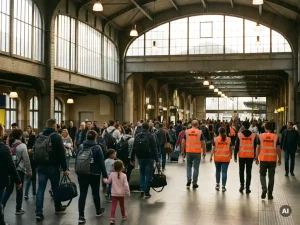
The biggest health risks when travelling to conflict zones include traumatic injuries from armed violence, infectious diseases exacerbated by collapsed sanitation systems, and severe mental health strain. These risks compound each other: a weakened healthcare infrastructure means that even routine medical problems can become life-threatening. For organisations sending employees into active or post-conflict environments, understanding each category of risk is the foundation of effective travel risk management.
What types of injuries are most common in conflict zones?
The most common injuries in conflict zones are blast injuries from explosives, gunshot wounds, blunt force trauma from collapsed structures, and burns. These injuries are often severe and require immediate surgical intervention that may not be available locally. Even indirect victims of conflict face elevated risks from road traffic incidents caused by chaotic conditions, crowd crushes, and accidents during rapid evacuations.
Business travellers and aid workers in high-risk environments are rarely on the front line, but proximity to conflict still creates significant physical danger. Mortar fire, car bombs, and improvised explosive devices do not discriminate by profession. Blast injuries in particular are complex; they can cause internal haemorrhage, traumatic brain injury, and hearing damage simultaneously, making field stabilisation difficult without specialist medical personnel.
Burns are another underappreciated risk. Fuel shortages in conflict zones lead to improvised cooking and heating methods, and infrastructure fires following airstrikes or shelling can spread quickly. Travellers staying in accommodation without functioning fire suppression systems face elevated exposure. Pre-travel briefings should account for these scenarios, not just the headline security threat.
What infectious diseases are most prevalent in conflict-affected areas?
Conflict zones have elevated rates of cholera, typhoid, hepatitis A and E, tuberculosis, and vector-borne diseases such as malaria and leishmaniasis. Displaced populations, destroyed water treatment systems, and overwhelmed or non-existent public health services create conditions where disease spreads rapidly. Travellers entering these environments face exposure risks that standard travel vaccinations may not fully cover.
Waterborne diseases are among the most immediate threats. When sewage systems fail and clean water becomes scarce, cholera outbreaks can follow within weeks. This has been documented repeatedly in conflict-affected regions across sub-Saharan Africa, the Middle East, and South Asia. Travellers who rely on local water sources or eat from informal food vendors face the highest exposure.
Vector-borne diseases present a longer-term risk that is easy to underestimate. In areas where routine insect control programmes have collapsed, mosquito populations increase sharply. Malaria prophylaxis and appropriate protective clothing are essential, but the specific strain of malaria and its drug resistance profile varies by region. Pre-travel medical consultations should be tailored to the exact destination, not just the country.
Respiratory infections, including drug-resistant tuberculosis, are also elevated in conflict zones where populations live in overcrowded, poorly ventilated conditions. Travellers spending extended periods in detention facilities, refugee camps, or shared accommodation face meaningful exposure risk.
How does conflict disrupt access to medical care?
Conflict disrupts medical care by destroying hospital infrastructure, displacing healthcare workers, cutting off supply chains for medicines and equipment, and making it unsafe for emergency services to operate. The result is that even treatable conditions become dangerous. A fracture, appendicitis, or severe infection that would be straightforward to manage in a functioning healthcare system can become fatal when local medical capacity has collapsed.
The degradation is not always visible from the outside. A hospital may still be standing but operating with minimal staff, no anaesthesia, no blood supply, and no functioning operating theatre. Travellers who assume that a building marked with a red cross guarantees adequate care are taking a serious risk. Pre-travel intelligence should include an honest assessment of actual medical capability at the destination, not just the presence of facilities.
Evacuation routes also become compromised during active conflict. Roads may be blocked, airports closed or unsafe, and airspace restricted. This is why organisations operating in high-risk environments need pre-established medical evacuation plans that account for multiple contingencies, not a single route that assumes normal conditions.
What mental health risks do conflict zone travellers face?
Travellers to conflict zones face significant mental health risks, including acute stress reactions, post-traumatic stress disorder (PTSD), anxiety, depression, and moral injury. These risks apply to journalists, aid workers, corporate employees, and security personnel alike. The psychological impact of witnessing violence, experiencing life-threatening situations, or operating under sustained threat can be severe and long-lasting.
Acute stress reactions can impair judgement in real time, which creates operational as well as personal risk. A traveller experiencing dissociation, hypervigilance, or emotional shutdown may make poor decisions about their own safety. Organisations have a duty of care to recognise this and build psychological support into their travel risk programmes, not treat it as a personal matter for the individual to manage.
Longer-term mental health consequences are frequently underreported. Many employees do not disclose psychological difficulties for fear of professional consequences. This means that organisations relying on self-reporting alone will systematically undercount the true impact. Structured post-travel debriefs, access to confidential psychological support, and clear communication that mental health concerns are taken seriously all reduce this gap.
Moral injury, the distress caused by witnessing suffering that one cannot alleviate, is particularly relevant for humanitarian workers and medical personnel deployed in conflict zones. It is distinct from PTSD but equally serious, and it requires different forms of support.
How should organisations prepare employees for conflict zone health risks?
Organisations should prepare employees for conflict zone health risks through pre-travel medical assessments, destination-specific health briefings, Hostile Environment Awareness Training (HEAT), vaccination programmes, and the establishment of clear emergency protocols before departure. Preparation must be active and specific, not a generic checklist distributed the day before travel.
Effective preparation addresses four distinct phases:
- Before travel: Medical fitness assessment, up-to-date vaccinations relevant to the specific destination, malaria prophylaxis where applicable, and a pre-travel briefing covering both health and security threats
- During travel: Access to 24/7 medical and security support, a clear escalation path if health deteriorates, and a personal first aid kit appropriate to the environment
- At the point of incident: Pre-established relationships with vetted local medical providers and a confirmed medical evacuation plan that does not depend on a single route or facility
- After travel: Post-travel health screening where appropriate, psychological debriefs, and a clear process for reporting health concerns without professional stigma
HEAT training deserves particular attention. It equips employees with practical skills, including basic trauma first aid, checkpoint behaviour, and how to respond to a medical emergency when professional help is not immediately available. For employees operating in genuinely high-risk country travel environments, this training is not optional.
What medical evacuation options exist when health emergencies occur?
Medical evacuation options in conflict zones include air ambulance transport, commercial medical escort, ship-to-shore evacuation for maritime operations, and ground evacuation to a safer location with higher medical capability. The right option depends on the nature of the emergency, the patient’s condition, the security environment, and what airspace and routes are accessible at the time.
Air ambulance is the most capable option for serious cases, providing in-flight medical care and direct transport to an appropriate facility. However, it requires a functioning airstrip, clearance from relevant authorities, and a receiving hospital that is prepared for the patient’s arrival. In active conflict zones, none of these can be assumed. Pre-arranged agreements with aviation providers who understand high-risk environments are essential.
Ground evacuation is sometimes the only viable option when airspace is closed or the patient cannot be moved by air. This requires armoured or protected vehicles, vetted local drivers with current route intelligence, and coordination with a 24/7 operations centre that can adjust the route in real time as conditions change. NGS has conducted medical evacuations in environments including Iraq and the Indian Ocean, where standard commercial options were not available.
The critical factor in all medical evacuation scenarios is speed of activation. Delays in initiating an evacuation, whether caused by slow decision-making, unclear authority, or inadequate pre-planning, directly worsen patient outcomes. Organisations must establish in advance who has authority to authorise an evacuation, what the trigger criteria are, and which provider will execute it.
How NGS Supports Organisations Operating in Conflict Zones
Northcott Global Solutions provides end-to-end health and security risk management for organisations sending personnel into conflict-affected and high-risk environments. Services are designed to address every stage of the travel lifecycle, from pre-departure planning through to post-incident recovery.
- Pre-travel health and security briefings calibrated to the specific destination, including current threat intelligence and medical capability assessments
- 24/7 monitoring and traveller support via a UK-based Operations Centre, with live tracking through the Aurora platform
- Hostile Environment Awareness Training (HEAT) covering trauma first aid, checkpoint behaviour, and emergency response in austere environments
- Medical evacuation coordination across air, ground, and maritime routes, with a global network of vetted providers across 190+ countries
- Crisis and emergency response for medical, security, and political emergencies, with an average urban response time of 40 minutes or less
- Post-incident psychological support and structured debriefs to address the mental health dimension of high-risk travel
If your organisation operates in or is planning travel to conflict-affected regions, early planning is the most effective risk mitigation available. Contact NGS to discuss a tailored travel risk management programme for your team.
Related Articles
- How long does an emergency evacuation typically take?
- What is the difference between a travel risk platform and a travel management company?
- How do you monitor travellers in real time during a crisis?
- How do you assess travel risk before visiting a dangerous country?
- What is the difference between a travel warning and a travel alert?