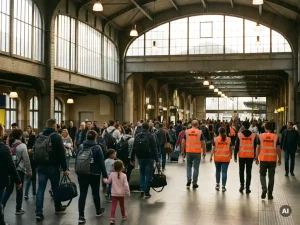
Keeping evacuees safe during a high-risk extraction requires a combination of real-time intelligence, disciplined route planning, clear command and control, and medical preparedness, all working together before and during the movement. No single element is sufficient on its own. The difference between a successful crisis evacuation and a dangerous one almost always comes down to how well those elements are coordinated under pressure. The sections below address the most critical questions organisations face when planning or executing a security evacuation.
What are the biggest threats to evacuee safety during an extraction?
The biggest threats to evacuee safety during a high-risk extraction are dynamic threat environments, poor information flow, inadequate transport, and the breakdown of command decisions under pressure. Each of these can turn a manageable situation into a life-threatening one, particularly in hostile environment evacuations where conditions change faster than static plans can accommodate.
In practice, the threats fall into several overlapping categories:
- Active security threats: Armed actors, checkpoints, civil unrest, and unpredictable crowd behaviour can compromise a convoy or individual movement at any point along a route.
- Information gaps: When ground teams and operations centres are not sharing live updates, decisions get made on outdated intelligence. This is one of the most common causes of extraction failures.
- Transport failure: Insufficient or inappropriate vehicles, driver unreliability, and a lack of contingency transport options all create exposure during personnel evacuation.
- Medical emergencies during transit: Evacuees may have pre-existing conditions, stress-related episodes, or injuries that require medical intervention mid-movement, particularly in multi-country operations.
- Border and checkpoint delays: Cross-border transfers introduce unpredictable friction. Documentation issues, shifting border policies, and local authority behaviour can stall movements at the worst possible moment.
Understanding these threats in advance is what makes pre-crisis planning so valuable. Organisations that have mapped these risks before an incident occurs are far better positioned to mitigate them quickly when the situation escalates.
How does route planning reduce risk in a hostile environment extraction?
Route planning reduces risk in a hostile environment extraction by removing improvisation from the most dangerous phase of any evacuation, the movement itself. A well-planned route accounts for current threat intelligence, alternative paths, checkpoint behaviour, vehicle suitability, and timing, so the team is never making critical decisions in real time without a framework to work from.
Effective route planning in a security evacuation is not a single map drawn before departure. It is a layered process that begins well before any crisis and continues to evolve as conditions change. The key elements include:
Primary and contingency routing
Every high-risk extraction plan should identify at least one alternative route from the outset. If the primary route becomes compromised, through roadblocks, civil unrest, or military activity, teams need a pre-approved alternative they can shift to without losing time or cohesion. In complex environments like Iraq or Libya, route conditions can change within hours, making this redundancy essential rather than optional.
Local intelligence integration
Route planning is only as reliable as the intelligence behind it. Local providers and trusted ground teams bring knowledge of road conditions, checkpoint behaviour, and informal access restrictions that no remote planning tool can replicate. During the Middle East crisis evacuation documented by NGS, local teams adjusted routes in real time as conditions changed, and that adaptability was central to moving hundreds of people safely across borders without incident.
Timing also matters. Movements planned during lower-risk windows, avoiding peak civil unrest periods, curfews, or known patrol patterns, reduce exposure significantly. Route planning that accounts for timing is fundamentally different from route planning that only accounts for geography.
What role does command and control play in keeping evacuees safe?
Command and control keeps evacuees safe by ensuring that every decision during an extraction is made by the right person, with the right information, at the right time. Without a clear command structure, evacuations fragment, teams act independently, communication breaks down, and clients lose visibility over where their people are and what is happening.
In a crisis evacuation, the command and control function serves several distinct purposes:
- Centralised situational awareness: A single operations centre tracking all movements prevents conflicting decisions and ensures that changes in one part of the operation are factored into every other part.
- Client communication: Organisations managing evacuations need regular, accurate updates. Command and control structures that include dedicated client communication reduce the anxiety that leads to poor decisions on the client side.
- Escalation protocols: When a situation deteriorates, there must be a pre-agreed escalation path. Who authorises a route change? Who approves a charter aircraft at short notice? Without those protocols defined in advance, decisions get delayed at the worst possible moment.
- Multi-movement coordination: Large-scale evacuations often involve simultaneous movements across different locations. A robust command and control capability can manage these in parallel without losing oversight of any individual group.
The value of this structure is visible in the feedback from real operations. During a large-scale Middle East evacuation, NGS coordinated movements across Kuwait, Iraq, and the UAE simultaneously, managing individual travellers, family groups, and corporate teams through a single coordinated structure. The result was zero transit incidents across hundreds of movements. That outcome does not happen through effort alone. It happens through structure.
How are medical risks managed during a security evacuation?
Medical risks during a security evacuation are managed by assessing the health status of all evacuees before movement begins, configuring transport and support around those needs, and maintaining medical oversight throughout the journey. Treating medical planning as a separate workstream from security planning is one of the most common and costly mistakes in emergency extraction operations.
In multi-patient or large-group evacuations, the medical assessment phase determines everything that follows. Knowing which individuals can travel seated, which require stretcher support, and which have conditions that may deteriorate during transit directly shapes transport configuration, staffing, and receiving arrangements. In a Sudan medical evacuation involving six travellers, NGS conducted early clinical assessments that allowed the team to consolidate six separate air ambulance requirements into two aircraft, delivering the same standard of care at a fraction of the cost, because the plan was built around medical reality rather than assumption.
For security evacuations that are not primarily medical in nature, the key medical risk management steps include:
- Pre-movement health screening to identify individuals who may need additional support during transit
- Medical personnel or paramedic capability on convoys where the risk profile warrants it
- Pre-arranged receiving facilities at the destination, so evacuees are not landing in uncertainty
- Contingency planning for in-transit medical emergencies, including diversion protocols and contact with local medical providers along the route
The integration of medical and security planning is what separates a genuinely safe evacuation from one that manages security risks while creating medical ones.
When should an extraction plan be activated versus delayed?
An extraction plan should be activated when the threat to personnel exceeds the risk of movement, and delayed when moving too early would expose evacuees to greater danger than remaining in place. The decision is never simply about whether a threat exists, it is about whether movement is safer than shelter, and whether the conditions required for a safe extraction are currently in place.
Several factors inform this judgement:
- Threat trajectory: Is the situation deteriorating rapidly, or is there a stable window that allows for planned movement? A fast-moving security crisis may require immediate activation. A slower-developing political crisis may allow for a phased, controlled departure.
- Route viability: If primary and contingency routes are both compromised, activating an extraction before they reopen may increase risk rather than reduce it. Hibernation, remaining in a secure location, is sometimes the correct short-term decision.
- Personnel readiness: Evacuees who are injured, medically unfit to travel, or in locations that cannot be reached safely may require a staged approach rather than immediate full extraction.
- Asset availability: Transport, close protection, and aviation assets must be in position or reachable within an acceptable timeframe. Activating a plan before assets are ready creates exposure during the critical early phase of a movement.
The organisations that make this decision well are those that have defined trigger criteria in advance, specific conditions that, when met, automatically initiate extraction procedures. Waiting until a crisis is fully developed before beginning that conversation is too late. The decision framework should be built as part of pre-crisis planning, not constructed under pressure.
What should organisations do before a crisis to prepare for safe extractions?
Before a crisis, organisations should establish clear evacuation protocols, map personnel locations and risk exposure, identify trusted local partners, and conduct scenario-based planning that tests their response before it is needed. Preparation is what determines whether an extraction is controlled or chaotic, and it cannot begin once the crisis has already started.
The most effective pre-crisis preparation covers several interconnected areas:
- Duty of care documentation: Know where every employee is, what their health status is, and what their personal circumstances are. Evacuating a family group requires different planning than evacuating a solo business traveller.
- Threat and vulnerability assessments: Understand the specific risks in each country or region where personnel operate. Generic risk awareness is not sufficient, assessments should be location-specific and regularly updated.
- Provider relationships: Establish relationships with vetted local providers before they are needed. In a fast-moving crisis, there is no time to source and vet ground transport, aviation, or medical support from scratch.
- Communication trees and escalation protocols: Every person in the organisation who has a role in a crisis response should know what that role is before the crisis begins. This includes who authorises what, who communicates with whom, and what the escalation path looks like.
- Tabletop exercises and training: Hostile Environment Awareness Training (HEAT) and crisis management exercises expose weaknesses in plans before real lives depend on them. Organisations that run these exercises respond faster and more effectively when a real event occurs.
- Technology and tracking: Personnel tracking tools and real-time monitoring platforms give organisations visibility over their people at all times, which is essential for making accurate decisions during an extraction.
Preparation is not a one-time activity. It requires regular review as threat environments evolve, personnel locations change, and organisational structures shift. The organisations that manage crisis evacuations most effectively are those that treat preparedness as an ongoing operational discipline rather than a project that gets done once and filed away.
How NGS supports safe extractions in high-risk environments
Northcott Global Solutions provides end-to-end support for organisations that need to keep people safe before, during, and after a high-risk extraction. Whether the threat is political instability, armed conflict, or a fast-moving security crisis, NGS brings the operational depth to manage complex evacuations without losing control of the wider picture. Key capabilities include:
- 24/7 emergency response and crisis management, with an average urban response time of 40 minutes or less
- Security and medical evacuation planning, including multi-patient and multi-country operations
- Close protection, armoured transport, and aviation support across more than 190 countries
- Live threat monitoring and personnel tracking through the Aurora, SIREN, and Polaris technology platforms
- Pre-crisis threat and vulnerability assessments aligned with ISO 31030
- Hostile Environment Awareness Training and crisis management exercises for corporate teams
If your organisation operates in high-risk regions and needs a trusted partner for emergency extraction and duty of care evacuation planning, speak to the NGS team to discuss your requirements.
Related Articles
- How do you manage travel risk across a globally distributed workforce?
- How do you build a travel risk management program from scratch?
- How do you assess evacuation risk for overseas operations?
- What is the role of a travel risk manager in a large organisation?
- What vaccinations do you need before travelling to high-risk countries?