Solo business travellers manage personal security risks abroad by combining thorough pre-trip preparation, situational awareness on the ground, and access to professional support when conditions demand it. The absence of a team or colleague means every decision rests with one person, which makes structured planning and reliable backup more important, not less. The sections below address the most common questions solo travellers and their employers face when navigating security risks on the road.
What are the biggest security threats facing solo business travellers?
The biggest security threats facing solo business travellers include petty crime and opportunistic theft, targeted fraud and scams, transportation risks, cyber threats to devices and data, and in higher-risk environments, kidnapping, civil unrest, and medical emergencies without immediate support. The specific threats vary by destination, but the common factor is that a lone traveller has fewer resources to manage any of them.
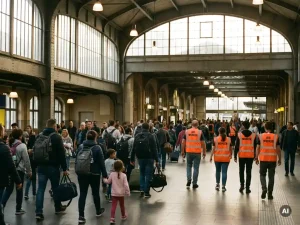
Petty crime is the most frequently encountered threat globally. Solo travellers are visible targets at airports, hotels, and busy commercial districts, particularly when they carry laptops, phones, and branded luggage that signal business travel. Opportunistic theft can escalate quickly if a traveller is in an unfamiliar area or distracted.
Cyber threats are an underestimated risk. Connecting to unsecured hotel or airport Wi-Fi networks exposes corporate data and login credentials. Travelling with sensitive business information adds a layer of risk that extends beyond personal safety.
In medium- and high-risk destinations, the threat profile shifts considerably. Political instability, civil unrest, and targeted crime against foreign nationals become realistic concerns. Medical emergencies are also a significant risk when travelling alone, since there is no colleague to summon help or communicate with local services in a crisis.
How does travelling alone increase personal security risk?
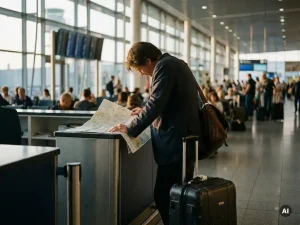
Travelling alone increases personal security risk because a solo traveller has no immediate backup, no shared situational awareness, and no one to raise the alarm if something goes wrong. Groups create natural deterrents and distribute decision-making under pressure. A solo traveller must manage all of this independently, which increases both vulnerability and cognitive load.
The absence of a companion means there is no one to notice warning signs, verify that a situation feels safe, or act if the traveller becomes incapacitated. In a medical emergency, this is particularly serious. A colleague can call for help, communicate with local services, and stay with the patient. A lone traveller in the same situation may have none of those options.
Solo travellers are also more predictable targets. Criminals and opportunists can observe patterns more easily when there is only one person to track. Routine hotel check-ins, consistent departure times, and fixed meeting locations all create exploitable patterns when there is no variation introduced by a group.
The psychological dimension matters too. Fatigue, unfamiliar environments, and time zone disruption all affect judgement. A group naturally compensates for one person’s off day. A solo traveller has no such buffer, which makes preparation and external support systems more critical.
What security preparations should solo business travellers make before departure?
Solo business travellers should make the following preparations before departure: research the destination’s current threat environment, register travel plans with their employer and relevant embassy, arrange travel insurance with medical and security coverage, secure their devices, and establish a reliable check-in schedule with a point of contact at home or in the office.
- Destination risk assessment: Review current political, security, and health conditions for the specific country and city. Conditions in a capital city can differ significantly from other regions.
- Travel registration: Register with your country’s embassy or consulate and inform your employer’s security or HR team of your itinerary.
- Insurance review: Confirm that your policy covers emergency medical evacuation, repatriation, and security incidents. Standard travel insurance often excludes these.
- Device security: Enable full-disk encryption, use a VPN, and consider travelling with a clean device if carrying sensitive data.
- Emergency contacts: Store local emergency numbers, your hotel address in the local language, and the contact details for your company’s travel risk support provider.
- Check-in protocol: Agree a schedule for regular contact with a colleague or family member so that any missed check-in triggers a follow-up.
For travel to medium- or high-risk destinations, a pre-trip security briefing adds significant value. Travel risk management services can provide destination-specific intelligence and practical guidance tailored to the traveller’s itinerary rather than generic country overviews.
How can solo business travellers stay safe in unfamiliar cities?
Solo business travellers can stay safe in unfamiliar cities by maintaining situational awareness, varying their routines, using vetted ground transportation, choosing accommodation carefully, and avoiding behaviour that signals they are alone, disoriented, or carrying valuables. Most incidents are opportunistic, and most can be reduced through consistent, low-effort habits.
Situational awareness does not mean constant vigilance to the point of distraction. It means paying attention to what is normal in a given environment and noticing when something changes. Crowded areas near tourist sites, transport hubs, and hotel lobbies are common locations for theft and scams targeting business travellers.
Ground transportation deserves particular attention. Using unofficial taxis or accepting unsolicited offers of transport is one of the most common ways solo travellers end up in dangerous situations. Pre-booking transfers through the hotel or a verified provider removes much of this risk.
Accommodation choice affects safety more than most travellers realise. Hotels in central, well-lit areas with controlled access and a functioning front desk reduce exposure significantly. Avoid sharing your room number publicly, and use the door security chain and peephole consistently.
Keep a low profile. Avoid displaying expensive equipment, discussing your schedule with strangers, or making it obvious that you are travelling alone. These habits reduce the likelihood of being identified as a target before any threat materialises.
What should a solo business traveller do during a security incident?
During a security incident, a solo business traveller should prioritise personal safety over property, move away from the threat if possible, contact their emergency support line immediately, and avoid drawing attention to themselves. The first few minutes of any incident are the most critical, and a pre-established response plan makes calm, effective action far more likely.
The instinct to protect belongings or gather information can be dangerous. If threatened with theft, compliance is almost always the right response. Property can be replaced; the priority is to remove yourself from the situation without escalating it.
If caught in civil unrest or a rapidly changing security environment, the principle is to shelter in place if movement would expose you to greater risk, or to move calmly and directly to a pre-identified safe location. Avoid crowds, demonstrations, and any area where security forces are concentrating.
Contact your support line as quickly as circumstances allow. If your company has a corporate travel safety provider, that number should be saved offline on your phone before departure. Relying on internet access during an incident is unreliable.
After the immediate threat has passed, document what happened, report to local authorities if appropriate, and inform your employer. Even incidents that resolve without injury should be recorded, as they may indicate a pattern relevant to other travellers.
When should a company provide professional security support for solo travellers?
A company should provide professional security support for solo travellers when the destination is rated medium or high risk, when the traveller’s profile or role makes them a potential target, when the trip involves sensitive activities, or when the traveller lacks experience operating in complex environments. Duty of care obligations make this a legal and ethical responsibility, not just a discretionary benefit.
Organisations operating under ISO 31030, the international standard for travel risk management, are expected to assess risk at the individual and destination level, not apply a blanket policy. A routine trip to a stable city requires a different response than a solo visit to a region with active civil unrest, elevated crime, or limited medical infrastructure.
The threshold for professional support is lower than many companies assume. It is not only relevant for journalists in conflict zones or executives in hostile environments. A solo traveller attending a conference in a city with high violent crime rates, or visiting a country with a recent history of political instability, may benefit from pre-trip intelligence, tracked itineraries, and a direct line to an operations centre.
The cost of professional support is consistently lower than the cost of a poorly managed incident, which can include medical evacuation, legal liability, reputational damage, and long-term impact on the traveller’s wellbeing.
How NGS supports solo business traveller security
Northcott Global Solutions provides end-to-end security and travel risk management for organisations whose employees travel alone into complex or high-risk environments. The support is built around the specific needs of the individual traveller and the destination, not a generic framework.
- Pre-trip intelligence and briefings: Destination-specific risk assessments covering political, security, medical, and travel-related conditions, calibrated to low-, medium-, and high-risk environments
- 24/7 itinerary monitoring: Live tracking and oversight via the Aurora platform, with a UK-based operations centre available at any hour
- Emergency communication: Mass and individual emergency alerts through the SIREN system, keeping travellers and their organisations informed in real time
- Close protection and ground support: Vetted local teams providing secure transportation, close protection officers, and on-the-ground support across more than 190 countries
- Medical and security evacuation: Rapid response capability with an average urban response time of 40 minutes or less, compared to an industry standard of 3 to 7 days
- Hostile Environment Awareness Training (HEAT): Specialist training to prepare individuals for operating in challenging environments before they travel
If your organisation sends employees abroad alone and wants a structured approach to managing that risk, contact NGS to discuss a solution built around your travel programme. Reach the team by phone at +44 207 183 8912 or by email at info@northcottglobalsolutions.com.