How to brief staff before high-risk travel
When someone is about to travel into a high-risk environment, the briefing matters more than most people realise.
It is often the last moment to shape how they think, what they notice, and how they respond when something feels off.
And yet, too many briefings still rely on documents, bullet points, or a quick call.
That approach might tick a box. It does not prepare someone for pressure.
A high-risk travel briefing should do far more than inform. It should equip.
If your briefing is just information, it will fail under pressure
It is easy to share information.
Crime rates, political context, general advice. All useful. All necessary.
But when something actually happens, people do not fall back on information. They fall back on what they understand and have practised.
A written brief or a slide deck rarely holds attention long enough to achieve that.

People need engagement, not just instruction
When someone can ask questions, challenge assumptions, and talk through scenarios, the dynamic changes.
They begin to understand how the environment works. They start to see where risks may appear. They gain confidence in what to do next.
That is why in-person briefings, or at least live, interactive sessions, consistently deliver better outcomes.
They turn passive information into active understanding.
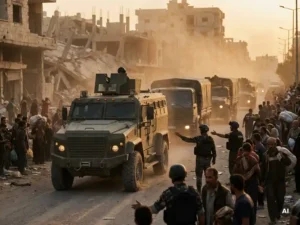
Start with the situation so people understand what they are walking into
Before discussing behaviour or precautions, you need to set the scene properly.
What is happening in that location right now?
That includes more than a headline summary.
You need to explain the broader picture, clearly and without overcomplication. Political tension, crime patterns, civil unrest, or conflict dynamics all shape the environment someone is stepping into.
Health risks and environmental hazards also matter. Disease, extreme weather, and infrastructure challenges can change how a situation develops.
When people understand the context, they make better decisions.
Without that context, advice feels abstract and is often ignored.
Then make it personal by linking the journey to the risk
Once the situation is clear, the next step is to bring it closer.
You need to connect the environment to the actual task.
Where will they be? When will they be there? What are they expected to do?
This is where vulnerabilities become visible.
A neighbourhood may be safe during the day but higher risk at night. A routine journey might pass through an area known for opportunistic crime. A public event might increase exposure without it being obvious.
When people can see how their specific movements intersect with risk, they begin to think differently.
They stop seeing risk as something distant. It becomes immediate and practical.
Walk the journey step by step so nothing is left to guesswork
This is where a high-risk travel briefing becomes truly useful.
You guide them through the journey as it will happen.
From arrival at the airport to accommodation. From accommodation to the work site. From routine movement to unexpected disruption.
At each stage, you explain what to expect and how to respond.
This includes:
- Areas to avoid and why
- Behaviour that reduces attention or risk
- What to do if approached, challenged, or threatened
- How to respond if a situation escalates
You also clarify who is supporting them on the ground. Drivers, fixers, security escorts. What authority they have and how decisions are made if conditions change.
When people can picture the journey in advance, they are far less likely to hesitate when something unexpected happens.

Communication protocols often decide whether things stay under control
In high-risk environments, communication is not a detail. It is a control measure.
People need to know how and when to check in, and what happens if they do not.
Make check-ins clear and practical
This is not the place for vague guidance.
You need to define:
- Whether check-ins are time-based or location-based
- Who receives them
- What happens if one is missed
You also need to ensure people are confident using the tools provided.
That might involve basic voice procedure, secure messaging, or escalation routes through a central platform like Aurora, supported by SIREN communications.
If communication breaks down, coordination quickly follows.
Training is what turns knowledge into usable instinct
Some environments demand more than a briefing.
They require practice.
If someone is likely to face checkpoints, confrontation, or unpredictable behaviour, it is not enough to explain what to do. They need to rehearse it.
That might include:
- De-escalation techniques
- Situational awareness drills
- Vehicle safety procedures
- Basic first aid
For roles with higher exposure, such as journalists or senior executives, the need becomes even clearer.
Lone travellers may also need additional preparation, particularly around confidence and response under pressure.
Training creates familiarity. Familiarity reduces hesitation.
Cultural and legal realities can catch people off guard
In some locations, risk is shaped as much by culture and law as it is by security threats.
Misunderstandings with authorities, unfamiliar legal expectations, or communication monitoring can create problems quickly.
Preparing for this means going beyond general advice.
It may involve scenario-based discussion or role-play, helping people understand how to respond in situations that feel unfamiliar or uncomfortable.
That preparation often prevents escalation.

A strong high-risk travel briefing ends with clarity and confidence
At the end of the briefing, people should feel clear about what is expected and confident in how to respond.
That does not happen automatically.
You need to confirm understanding, not assume it.
Encourage questions. Leave space for concerns. Make sure people know who to contact if something changes before or during travel.
This final step reinforces something important.
You are not just sending people into a challenging environment. You are supporting them through it.
Preparation is visible when things start to go wrong
When a situation changes, the difference between a good and poor briefing becomes obvious.
One group hesitates. The other acts.
One group relies on guesswork. The other follows a clear plan.
That difference is not luck. It is preparation done properly.
If you are responsible for sending people into high-risk environments, the briefing is one of the most important moments you control.
Getting it right changes outcomes.