Size doesn’t win in a crisis. Agility does
When events move quickly, complexity rises and pressure builds.
What matters most is not how large an organisation looks in steady state, but how effectively it can adapt when people genuinely need help. That is why agility matters.
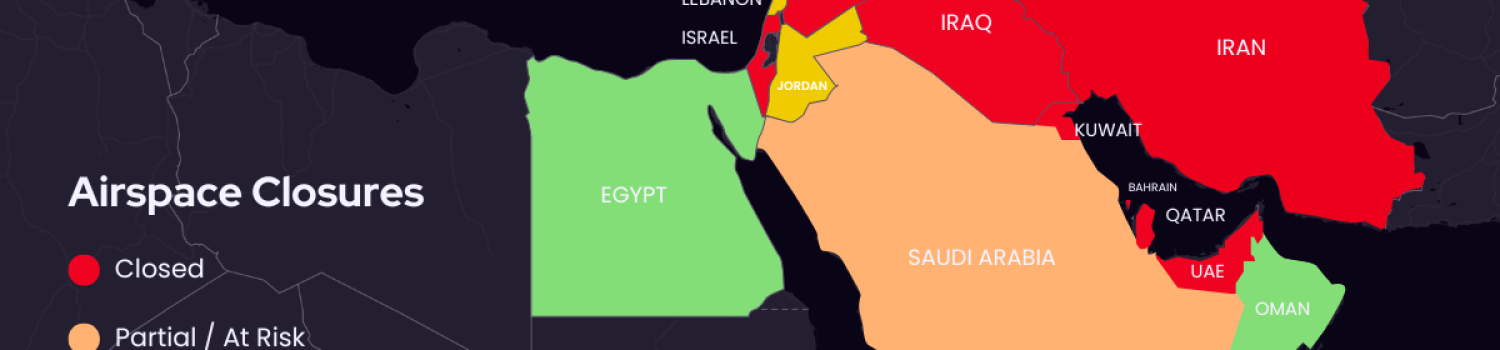
Ongoing events in the Gulf have reinforced a point that deserves more attention for those operating in the international assistance industry. In live, fast-moving regional emergencies, smaller mid-tier providers can hold a very real advantage.
This is not because larger companies do not have value; they absolutely do, particularly with day-to-day medical support, routine security or advisory services, and providing global coverage for thousands of workers.
Nor is it to suggest there is only one correct operating model.
However, when an incident becomes multi-layered and operationally demanding, the ability to make decisions quickly, integrate multiple disciplines and stay close to the client often matters more than size alone.

That is where mid-tier providers come into their own.
They are often big enough to help international clients, operate around the clock and coordinate across several workstreams, yet still lean enough to remain nimble.
They can:
- combine structure with speed,
- planning with pragmatism,
- and senior judgement with hands-on operational delivery.
In a live, enduring crisis, that matters enormously.
Large organisations bring capability, brand recognition and established service lines. But scale can also introduce layers of separation between functions, slower escalation and more complicated coordination. In a dynamic crisis event, the problem rarely stays neatly within one discipline. It may involve security-led planning, evacuation, medical considerations, aviation, ground movement, welfare/HR support, cultural obstacles, family considerations, immigration issues and changing restrictions all at once.
At that point, response becomes a coordination problem, not a single-service solution.
This is where integrated, agile operating models often perform best. The ability to align medical input, security advice, logistics, technology and ground truth into one coherent response can be the difference between white noise and actual delivery.
That is why the mid-tier part of the market deserves more recognition. It occupies an important space between the global giants and the smaller specialists.
From the moment the first reports emerge, organisations face the same immediate challenge. Information is incomplete. The picture is moving. Decisions may need to be taken before certainty exists.
For employers, families and travellers alike, that period between “something may be happening” and “we now need to act” is often the most important stage of the response. This is where the quality of a response partner becomes visible.
It should not simply wait for instructions but already be assessing the situation, identifying likely exposure, anticipating where pressure points may develop, and engaging early enough to make a practical difference before options narrow.
That early proactive support can be the difference between an orderly, managed response and a reactive scramble.

Why the mid-tier model can be especially effective
The value of a smaller provider is not simply that it moves faster. It is that it often operates closer to the problem.
Senior decision-makers remain nearer to the operation. Clients are less likely to be passed through multiple managerial layers. Vetted and proven providers on the ground are known relationships rather than newly sourced names. Operational, commercial and welfare requirements can be balanced in real time by people who are directly engaged in the response.
That creates several advantages. Decisions can be taken faster. Multiple disciplines can be integrated more easily. The response is often more adaptable when the original plan changes. And client communication tends to remain closer to the operational truth rather than filtered through excessive process.
This is not a criticism of size. It is simply an observation from experience: when speed, flexibility and judgement are under pressure, agility becomes a major operational advantage.
People are not cargo
One of the most overlooked realities in crisis response is that people working overseas are rarely dealing only with themselves.
Many are with spouses, children or wider dependants. They usually have homes, vehicles, pets, personal belongings and a second life built around their posting. Some will have children who are frightened and confused. Some families won’t agree on whether to leave. Some individuals hesitate for understandable reasons.
That means affected personnel cannot simply be treated as names on a manifest. They are people trying to make difficult decisions under pressure. For many, this may be the first crisis they have ever encountered.
Good crisis response understands that. It recognises that supporting evacuation or shelter-in-place is not only about secure accommodation and transport. It is about helping people process uncertainty, understand options, and move with confidence when the time comes.
Small issue to mass movement problem
Another lesson from events such as those seen recently in the Gulf is that the issue rarely stays limited to one traveller or one family.
Very quickly, what begins as support to a handful of employees can become a requirement involving hundreds, and in some cases thousands, of people. At that point, the challenge changes completely.
The question is no longer simply, “can we help this person?” It becomes, “does the organisation actually know where all of its people are, who is with them, and what support do they require?”
That is often where internal HR, travel risk and workforce governance arrangements come under real scrutiny.
In a live crisis, organisations may suddenly need reliable answers on location, immigration status, medical needs, dependants, self-movement, stay behind business-critical personnel and priority cases. If that information is incomplete, outdated or disjointed, the requirement can balloon overnight from “we may need help” into a complex accountability and movement problem involving potentially endangered people.
And in reality, it all needs to happen yesterday.

Duty of care becomes real very quickly
As soon as that happens, the issue moves beyond operations alone.
Questions of corporate duty of care, insurance compliance, reputation and legal exposure come into play immediately. Organisations must be able to show that they understood where their people were, assessed the risks, communicated appropriately and took proportionate, defensible steps to support them.
If visibility is poor or the response is fragmented, the consequences are not limited to delay and confusion on the ground. They can quickly become governance, commercial and reputational issues for the business itself.
“When events escalate, duty of care stops being a policy statement and becomes a test of whether the organisation can act quickly, coherently and defensibly.”
The right local partners matter
Speed alone is not enough.
In a crisis, there is often pressure to secure support quickly from whoever is available on the ground. But using poorly understood or unvetted providers can create new risks, place people in more danger, and expose the client to additional problems.
In complex environments, you have to know who you are dealing with.
That means working with trusted, vetted local partners whose credibility, limitations and operating standards are understood well in advance. Mature crisis response is not about assembling whoever answers the phone in the moment. It is about relying on relationships that have already been built, tested and proven over time.
The wrong local partner can make a bad situation materially worse.

Cost control, fairness and avoiding exploitation
Another reality of live crisis response is that, as urgency increases, costs can escalate rapidly.
Aircraft, accommodation, transport, medical provisions, security resources and local logistics can all come under pressure at once. As availability tightens, prices rise. In the worst cases, both individuals and companies can find themselves exposed not only to danger and uncertainty, but also to opportunistic pricing and poor-value solutions that do not always deliver what they promise.
That is where cost containment, fairness and disciplined judgement become especially important.
A credible response provider should not simply pass on inflated pricing without challenge or commit the client to expensive options that have not been properly scrutinised. It should work to contain costs where possible, secure resources early, and ensure that if something is expensive, it is expensive for a reason – because it is credible, deliverable and operationally necessary.
This is another area where mid-tier providers can often add value. They are usually close enough to the market to move quickly, negotiate sensibly, set pricing where possible, and avoid unnecessary layers of cost. Just as importantly, they can help ensure that scarce or expensive resources are only secured where they are capable of delivering.
“In a crisis, the issue is not just about speed and delivery; it is about balancing that against fairness, preventing exploitation and making sure the response remains proportionate.”

Going in when others are getting out
Another reality often underestimated in crisis response is the importance of deploying forward into the theatre when circumstances justify it.
Remote coordination and technology both have a major role to play, but there are still moments when physical forward presence becomes strategically important. Embedding experienced personnel closer to the client and affected population can improve situational awareness, decision-making and trust.
It helps bridge the gap between the provider’s command structure, where the client’s central leadership (or crisis management team) is located, and the reality on the ground.
And sometimes, while others are rightly focused on getting out, response teams must make the tactical decision to go in.
That may mean being the trusted face on arrival at a hotel, airport or safe location. It may mean being the person knocking on a door to say it is time to move. In either case, calm presence and human reassurance can matter more than simply having a plan.
Technology is now central
Technology is also changing how effective crisis response is delivered.
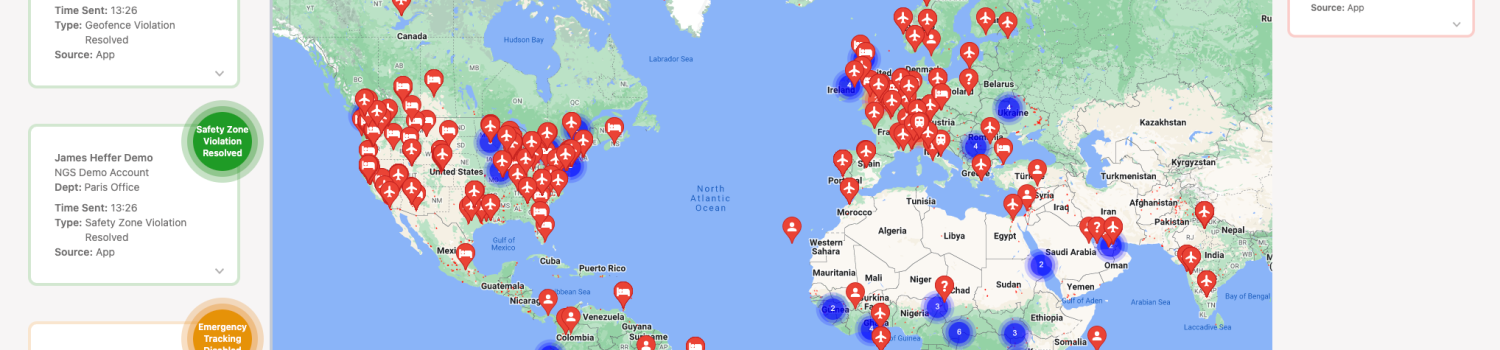
GPS-enabled platforms can help organisations understand where their people are, which alerts affect them and how close they may be to disruption. Technology can help paint a better picture of ground conditions by combining location data, incident reporting and operational updates into something decision-makers can actually use.
Artificial intelligence also has an increasing role to play in interpreting fast-moving events, summarising large volumes of reporting, surfacing likely impacts and helping users access relevant advice quickly.
Technology should not replace human judgement in a crisis, but it can dramatically improve visibility, speed and decision-making when every second counts – that combination matters. Integrated with a Global Operations Centre, it provides additional context, sound judgement and that leads to decisive action. Together, they create a much stronger response model.
The rest of the world does not stop
One crucial factor often overlooked during a regional crisis is that the rest of the world continues at business as usual.
Other international clients still need routine support and wider incidents still happen. All day-to-day work does not simply pause because one region has become the headline. A credible response provider therefore has to surge into the crisis without doing so to the detriment of everyone else who still depends on them.
That balancing act is not easy, but it matters. It is another test of leadership, capacity and discipline.
Final reflection
Recent events in the Gulf have again shown that effective crisis response is about far more than scale. It is about early judgement, integrated coordination, safe use of trusted local partners, practical technology, strong governance, cost discipline and the ability to turn plans into action when events stop following the script.
Above all, it is about understanding that those affected are not just travellers. They are employees, spouses, parents and dependants living through uncertainty in real time.
The takeaway is simple: in a genuine crisis, agility, humanity, scalability and practical coordination are not secondary qualities. They are central to effective response. And as international risks continue to evolve, the role of agile, integrated mid-tier providers in that space will only become more important